I’ve come to the conclusion that, for a hotel, there are two possible games to play when it comes to location:
a) In an area with existing demand, a strong concept is nice to have.
b) In an area with no demand, a strong concept is a must.
I often see less experienced entrepreneurs confuse these two when buying a hotel.
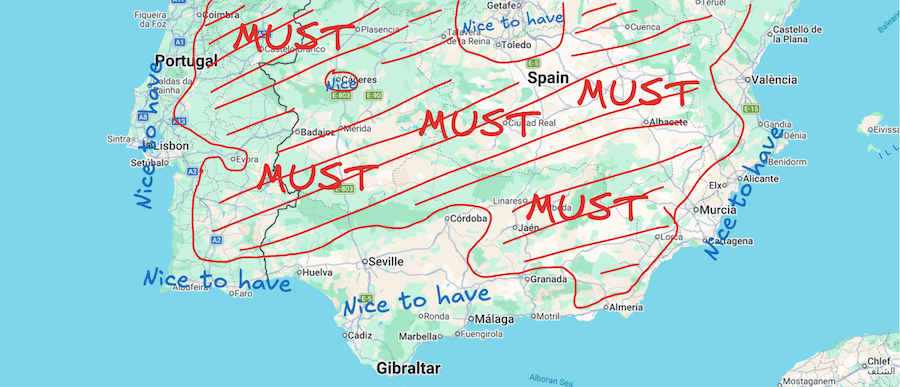
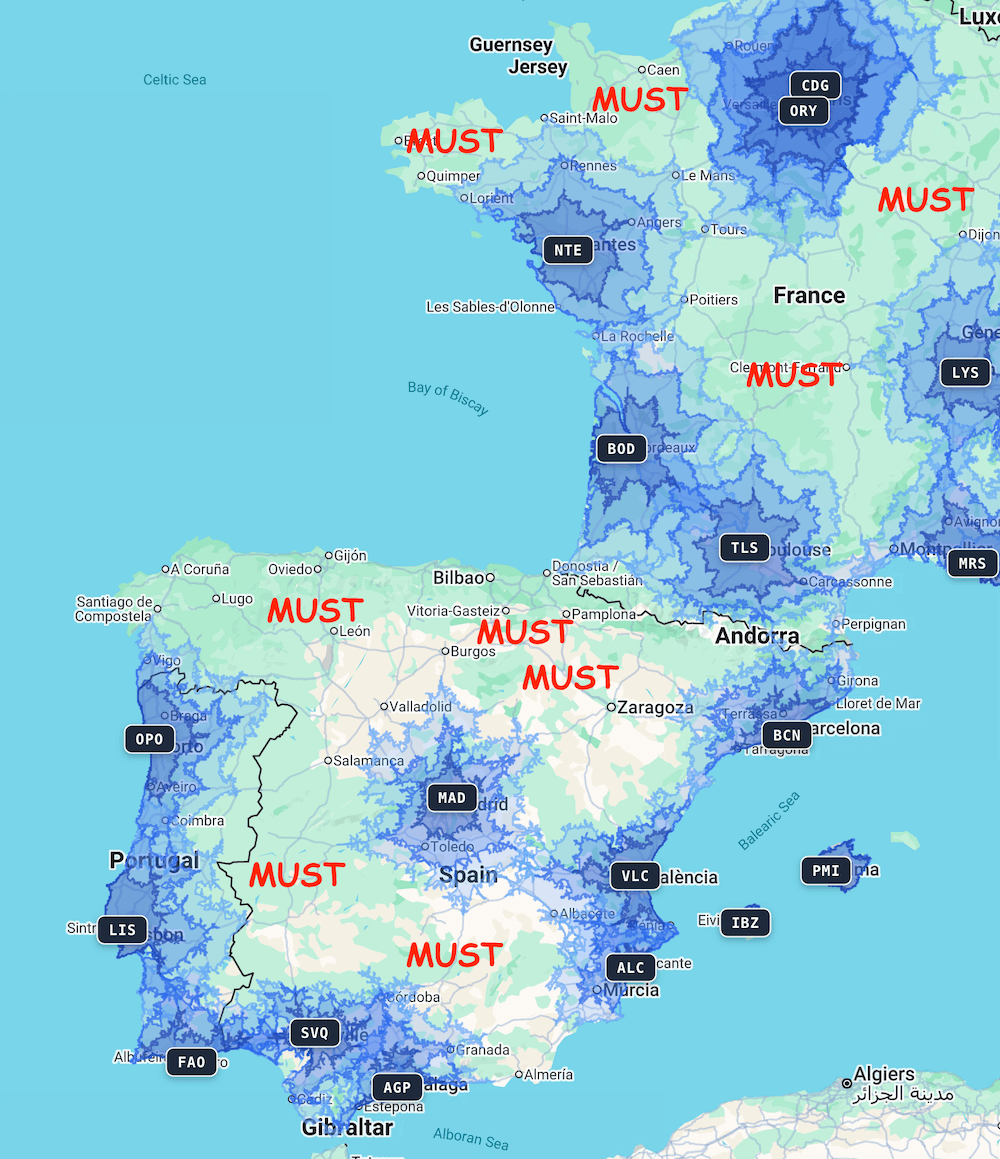
This correlates with the distance from the airport, but not always. Check out this visualization showing areas within a 30-, 60-, or 90-minute drive of the airport.
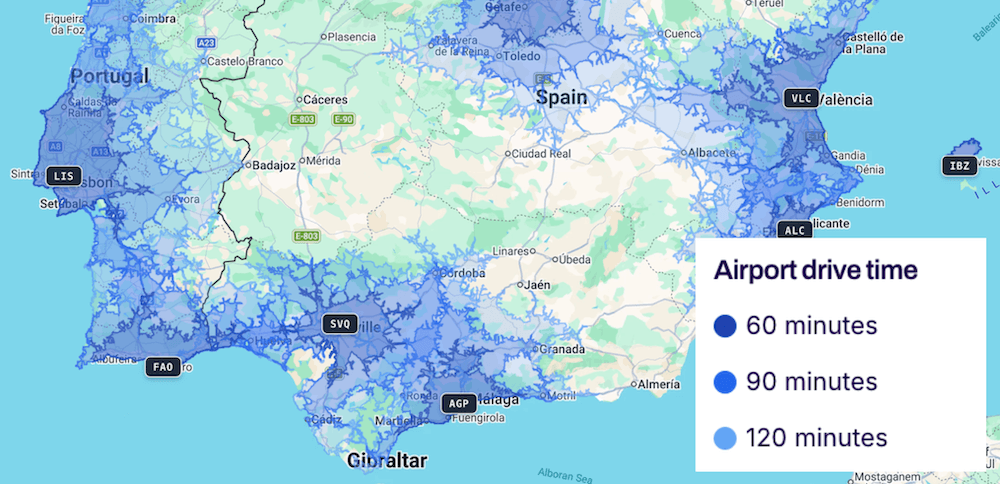
To get people to drive two or three hours just to stay at your hotel, you need a very strong concept and marketing to match. This applies to Europe, where people aren’t used to driving such long distances. In the US and some other parts of the world, it’s much more acceptable.
You can open this map and play around with the airport visualizations.
Good location: the concept is nice to have
When you have a location with lots of tourists, your job is to show people you’re there and optimize your revenue management.
A good analogy is a motel next to a busy highway that just needs to put up a sign saying, “Hey, we have rooms,” to attract guests. Your highway is Booking.com, Airbnb, or Expedia. You’re fine with a generic concept, a decent website with direct bookings, and a boring Instagram account showing your lobby and the new cocktail menu. The concept is nice to have.
The only issue is that real estate in these locations is very expensive, so you might think you’d rather buy something super cheap in a worse location. That’s when you need a strong concept and marketing.
The magic happens when you combine all three: a good location, an epic concept, and superb marketing. You’ll just crush it.
There’s a lot of competition in good locations, obviously. But the majority of competitors aren’t very competent. Most play the long-term real estate game and put in the minimum effort needed to be “good enough.”

Bad location: strong concept and marketing are a must
And here’s the problem. Most people with a generic concept and average marketing skills think they’re exceptional.
They have nothing that differentiates them, and they fail badly. They buy a cheap property and then struggle to attract guests. Sometimes they do have a strong concept, but their marketing is just OK. That’s not enough.
A few years ago, it was enough to have a visually appealing place and basic camera skills to get lots of views and followers on Instagram.
Now, Instagram is one of the most competitive places on the internet. You see all those viral videos in your feed, but they represent such a small percentage of the content being created.
Another illusion is that getting 200k views on a Reel will bring you thousands of new guests. That rarely happens, for many different reasons.
I often see people lie to themselves about airport connections.
You see a bunch of small airports on Google Maps, then check how many passengers they have per year and what flight connections they offer, and things don’t look bad. But in reality, these airports are mainly used by locals, and the flights are very limited and expensive.
If you get some guests coming through these airports, great. But don’t count on them.
Another common mistake is putting a good, well-executed concept in the wrong location.
A good example is this place in the Austrian Alps that tries to attract companies for offsites. The space is extremely well designed and operated. But their clients are either based in Vienna or Munich or have to fly into one of those cities. Both are a three- to four-hour drive away. This won’t work for company offsites but might work for other concept. Wring choice.
I love brainstorming concepts for “bad” locations because they require a lot of creativity and hustle. But when they work, the ROI is just insane.


.png)