There’s a nice café near my house where I stop by once or twice a week.
I’ve been there so many times that I’ve had a chance to see how busy it gets throughout the day.
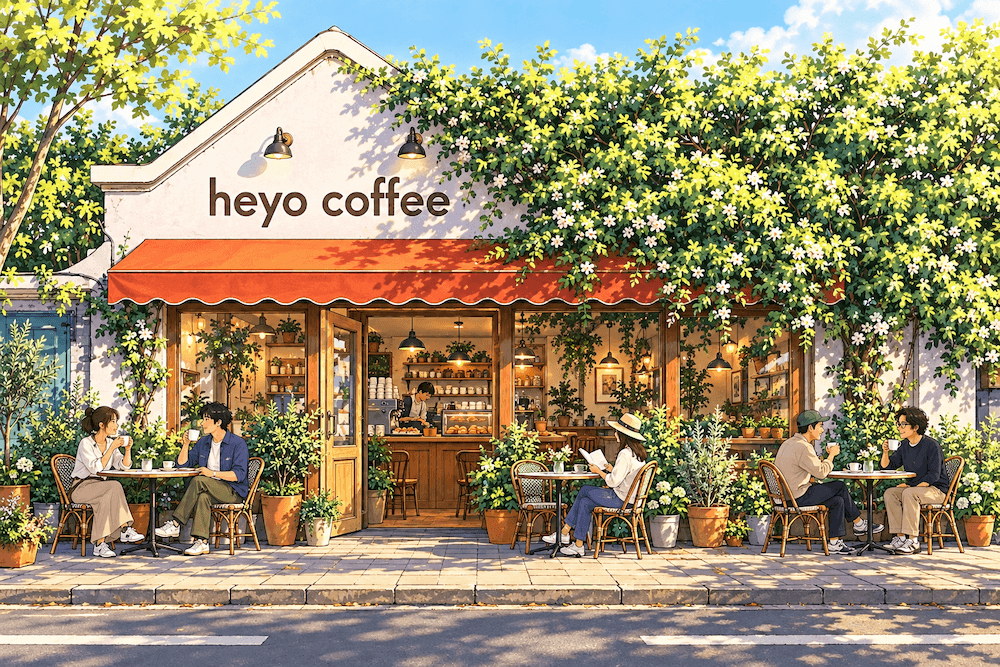
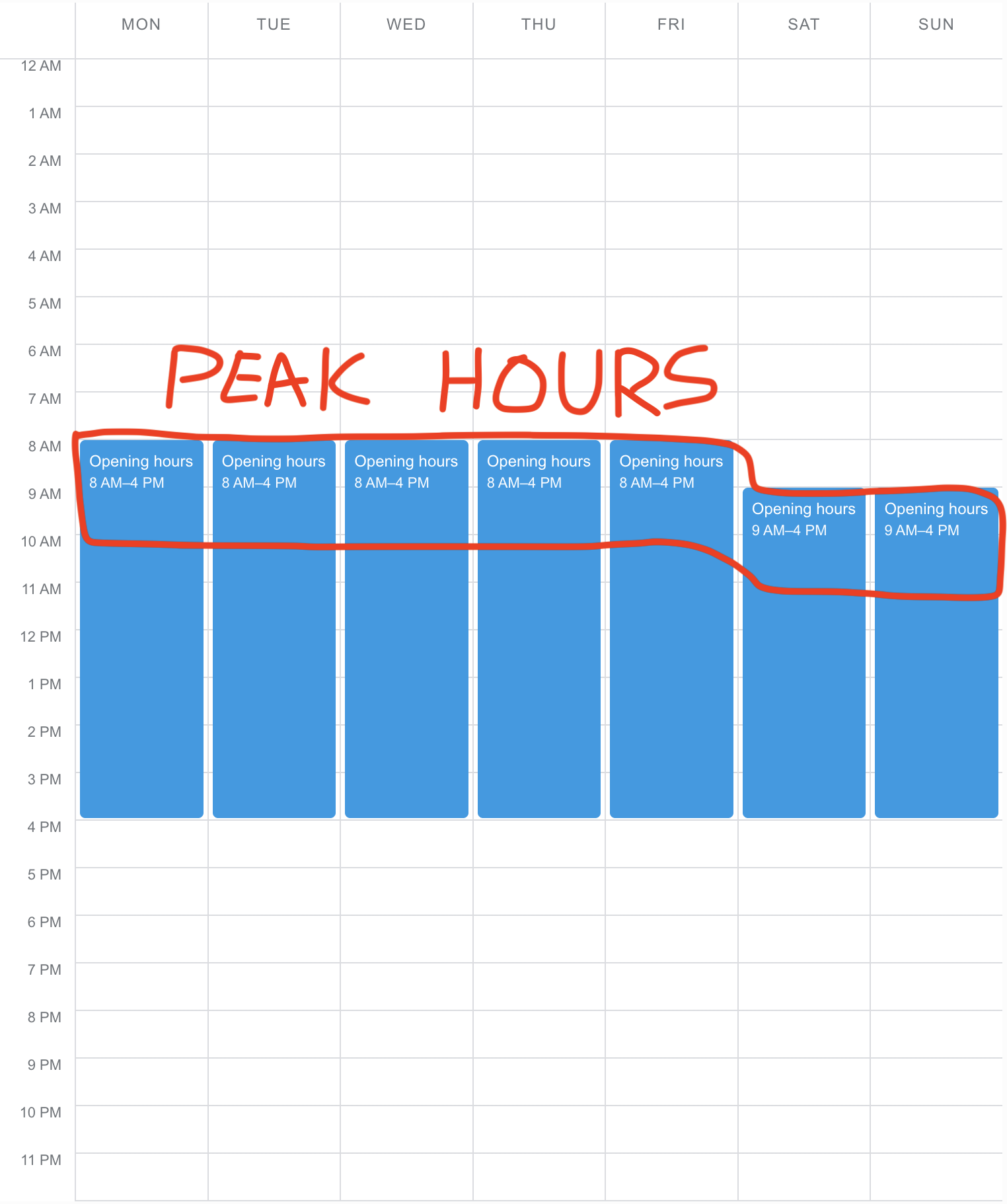
I don’t think it will surprise you to hear that its busiest hours are between 8 and 10 am. There’s barely anyone there in the afternoon, and it closes at 4 pm.
Here are its opening hours:
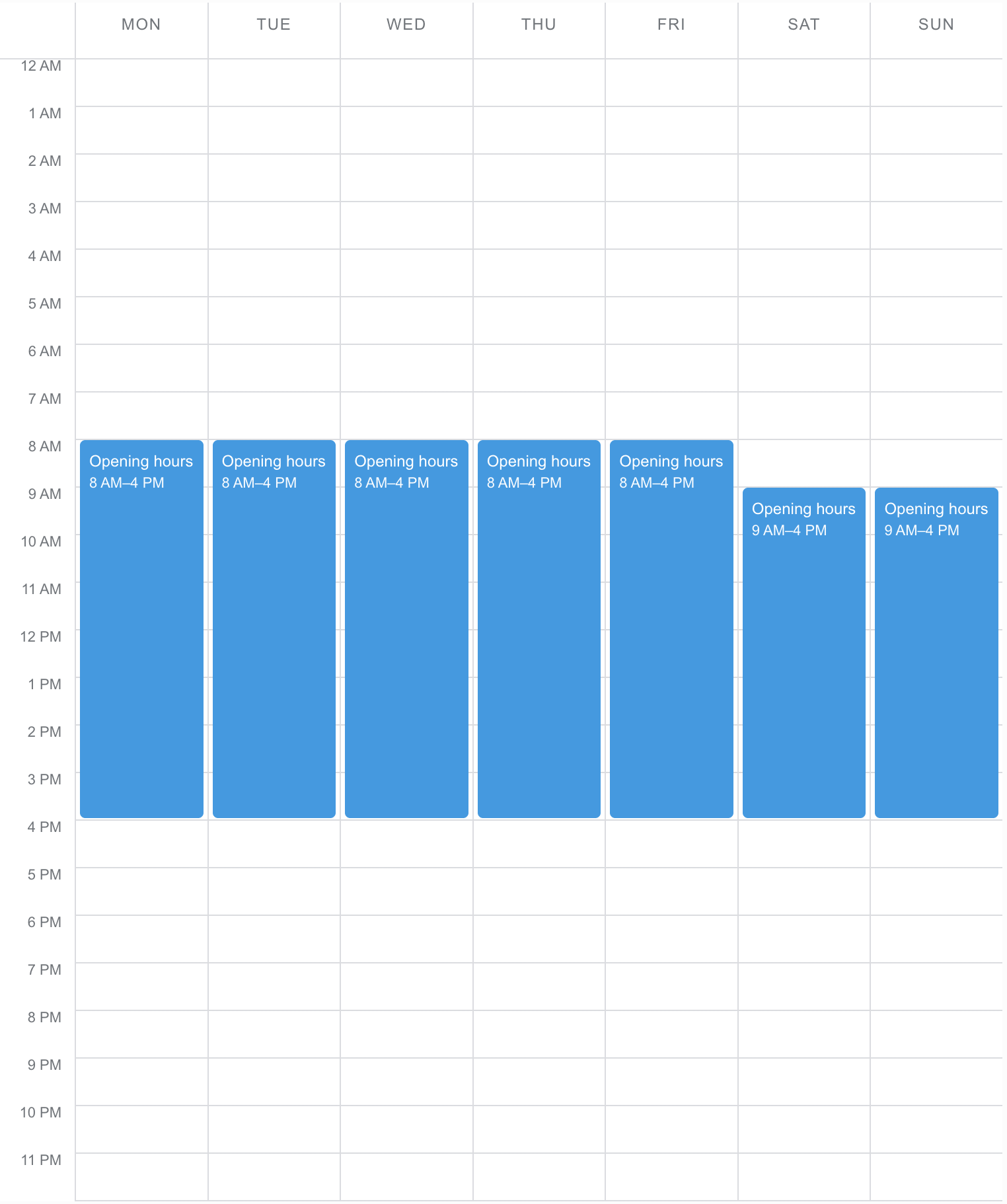
It’s open 54 hours a week = about 32% of the 168 hours in a week.
So I started thinking: it uses the space only 32% of the time, but pays the full rent 🤔
Nobody’s going to buy a coffee at 8 pm (unless you’re in Portugal). And nobody’s going to buy one at 3 am. So closing at 4 pm makes sense.
This café is popular in the neighbourhood, doesn’t have much competition, and makes enough money to stay in business long term. That might not work on a main street in London, where the rent could eat up the profit.
I’m sure the owners would love to open for just the two peak hours in the morning, focus on their craft, and make their money. But that probably wouldn’t be economically viable.
Other cafés can’t turn a profit by selling coffee alone, so they have to hustle a bit (or a lot).
They often create hybrid concepts, selling different products over a longer day.

People want lunch, and you might attract a different crowd in the evening if you sell organic wine.
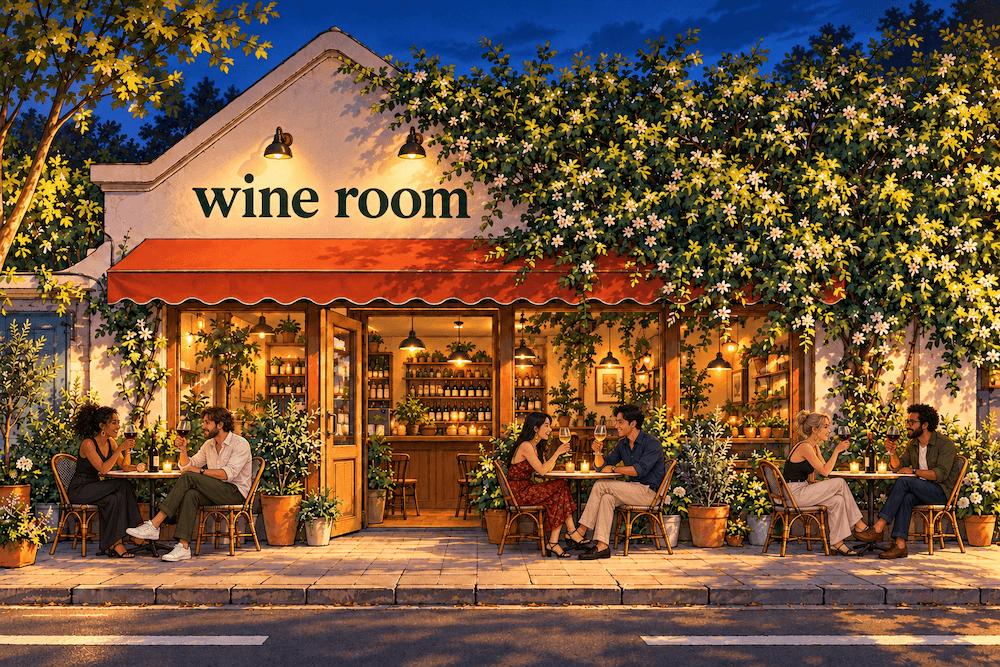
That can be a bit confusing for customers, though. They probably won’t see you as the go-to place for any one of those things.
And when you took that barista course and dreamed of opening your first café, selling wine in the evening probably wasn’t part of the master plan. But hey, someone has to pay the rent!
So is there a better solution? Maybe.
Here’s the idea: multiple businesses operate from the same retail space. They divide the hours between them, each running under its own brand.
Each business has its own team and company. They share the space, but use it in different time slots.
.png)
This way:
- Each business can focus on what it does best and cares most about.
- Each independent operator gets exclusive use of the venue during its strongest hours.
- Each operator pays less rent because the cost is shared.
- Staffing costs can be lower because each team works fewer hours.
An intermediary business would need to set this up and manage the relationship between landlords and operators. That intermediary could be quite lucrative.
It reminds me of coworking operators like WeWork, which changed traditional office leasing by offering more flexible terms and a different product.
For landlords, having several operators could make rental income more resilient: losing one operator wouldn’t necessarily mean losing all the income from the space. They might also earn more if the intermediary shares some of the upside.
Simple idea, difficult to execute.
You’d need systems and processes that let the businesses run smoothly one after another:
- Cleaning procedures and handover rules
- A TRMNL e-ink display on the door, programmed to show the right business details at the right time
- A large LED sign at the entrance that changes branding automatically
- Movable furniture, partitions, and decorations
- Lighting presets, separate POS terminals, and plenty of other details


Many of these changes could be automated. The handover would need to take 15–30 minutes, ideally less.
There are, of course, plenty of regulatory challenges. Germany might not be the first market where I’d try this.
Once you look at retail businesses and their opening hours, you can start pairing them up. Here are some ideas:
And now for the fun part!
OK, you get the basic idea. Let’s get creative.
People drink coffee every day. Some people treat wine the same way, but most wine bars are closed on Mondays. Why not give that time slot to someone else - perhaps an evening language school?
And there are still plenty of hours when the space would be empty. Some people work at night on their laptops because their clients or colleagues are in different time zones. Not all of them want to work from home.
A workspace for night owls is a niche concept and might not be profitable enough as a standalone venue. But combined with other businesses? Why not?
.png)
Today, retail rent is determined largely by location and floor area. Of course, other factors matter too, but those are usually the main ones.
Now add time to the equation:
Price = location × m² × time
That creates room for dynamic pricing: charge more for time slots in high demand and less for the ones nobody wants.
More small businesses could emerge
This idea also reminds me of dark kitchens.
You can rent a professional kitchen and run a food delivery business from it. It’s a way to test an idea without taking on the cost and risk of opening a restaurant.
Some lifestyle entrepreneurs don’t necessarily want to open a restaurant, even if their concept succeeds. They might be happy running a dark kitchen twice a week.
How many people would open a café if you removed the friction and let them operate twice a week for five hours?
How many Shopify stores would open a pop-up shop twice a month to connect with customers in person?
If you’re excited about the idea and want to build it, I’d love to invest and help with the first prototype. Or just take the idea and tell me when it’s done. I’d love to see it working!


.png)